How Soumitra Dutta’s ideas can shape the future of business education
For a brief moment‚ universities that had not touched their delivery model in decades were suddenly running seminars via video calls‚ recording lectures and experimenting with tools that had sat dormant for years․ It looked like a transformation․ Then campuses reopened․ Most universities retreated almost entirely to what they had always done․ We are talking about what happened during and post-COVID.
Soumitra Dutta has spent two decades at Cornell University‚ where he was the founding dean of the SC Johnson College of Business, and later, more than three years as the Peter Moores Dean of Saïd Business School at the University of Oxford. He has had an in-the-trenches view of universities, which many say has slow to adapt to the technological revolution. "Using Zoom doesn't mean you have digital‚" Soumitra Dutta said in an interview with The Economic Times. "Lifelong learning means you have personalization like how Amazon understands you․ You need customized bite-sized learning and new models of learning to adapt to AI and the metaverse․ You need to have the core capability for doing that," says Dutta, former dean of Oxford Said Business School.
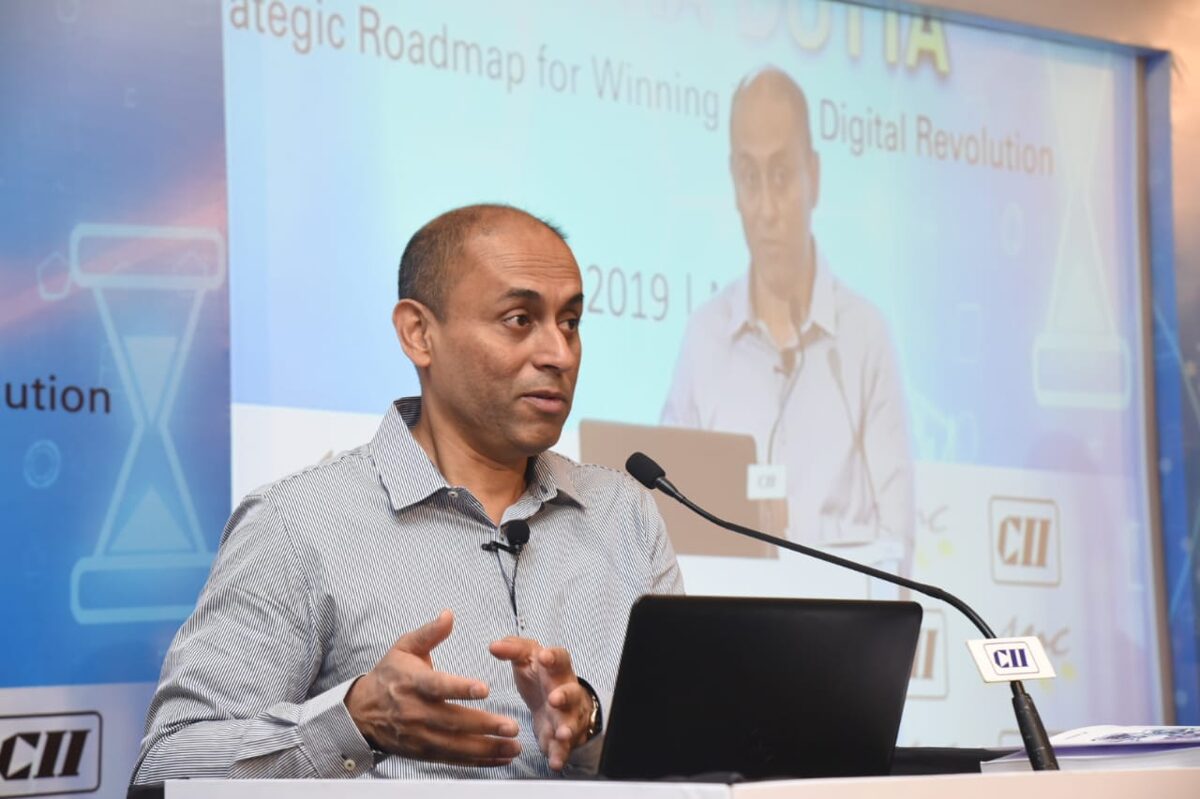
Superficial digitization means putting class lectures online and chatbots on student portals․ A deeper transformation requires institutions to build their own technical capacity‚ reconceptualize courses‚ realign credentialing‚ and accept that modular‚ continuously-updated learning looks nothing like a semester․
When he was at Oxford, Soumitra Dutta established Oxford Saïd Online‚ an internal EdTech group that not only created asynchronous content‚ but actually built in-house capabilities around AI‚ large language models‚ NFTs and other new models of digital distribution․ It was intended to be an experiment in institutional capability-building.
Soumitra Dutta, Oxford Dean has often emphasized scale and inclusivity: "Most top business schools and universities are happy having an exclusive‚ smaller footprint‚" he says. "But what about the others who are left behind? Can we first increase the footprint of impact?" Elite institutions are selective‚ and Dutta challenges them to consider whether this is a values choice‚ or whether they have not yet found the imagination to transform themselves․
Dutta has also suggested that universities could partner with gaming companies‚ entertainment companies and governments to create learning configurations that can reach more people and change their lives at scale. Soumitra Dutta stresses that the next generation of CEOs -- that is, B-school students of today -- will need to harness the power of AI to drive innovation forward and tackle environmental and social challenges․ AI should be used to improve human creativity, and can supercharge human intelligence‚ judgment and innovation․
Soumitra Dutta Explained that Why the Next Phase Favors the US
The transition from digital AI to physical intelligence will require deeper integration with scientific research industrial deeper integration with scientific research industrial systems, and real-world environments. The structural advantages that gave the United States an edge in the first phase of AI may become even more decisive in the next.
As Explained by Soumitra Dutta, Oxford former dean “The next phase of AI is not just about better models-it is about integrating computation with the physical world. That requires an ecosystem that combines science, engineering, capital, and institutional scale. The United State is uniquely positioned to do this.
The emergence of AI Landscape is not a simple race with a single winner. It is a competition across different layers that are research, capital, infrastructure, and deployment.